
Border encounters dropped from 300,000 per month under Biden to 10,000 per month under Trump. Fifteen consecutive months of zero immigrant releases. The border is, by every measurable standard, more secure than it's been in decades.
So naturally, a group of Republican governors looked at those numbers and thought: perfect time to start handing out work permits to my rich friends who own businesses!
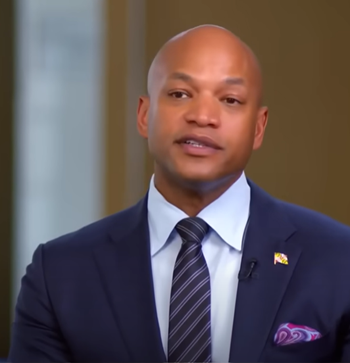
Utah Governor Spencer Cox and Oklahoma Governor Kevin Stitt — both Republicans — have teamed up with Democratic Governors Wes Moore of Maryland and Matt Meyer of Delaware to launch a National Governors Association task force. The goal is to push Congress to grant states the authority to issue migrant work visas on their own. Cox is co-leading the effort with Meyer. The task force announced its agenda at the NGA's annual summer meeting, hosted this year at the Stein Eriksen Lodge in Park City.
Cox laid out the pitch with a line that sounded rehearsed: "For 40 years, we've been trying to do immigration reform and nobody's ever been able to get it done. But what's different this time is that we have a secure border."
Translation: Trump did the hard part. Now let us undo it.
Cox followed up by asking Congress, "Work permits, can we start there?" Stitt made the same case from the economic angle: "Let's go ahead and let the governors issue workforce permits." He argued he's "closer to the agricultural needs of Oklahoma than somebody in Washington, D.C." and called mass deportation of working undocumented immigrants "devastating."
That word — devastating — tells you everything about where these governors actually stand. President Trump ran on enforcement. Voters delivered him Michigan, Pennsylvania, and a mandate. And now Republican governors are publicly arguing that removing illegal workers from the country would be too painful for business. The Chamber of Commerce wing didn't die. It just put on a cowboy hat and moved to the governors' mansions.
Utah Senator John Curtis has already introduced a state-sponsored visa bill in Congress. Nevada Democratic Senator Catherine Cortez Masto reintroduced her own bill that would allow immigrants to pay fines for legal status and restrict deportation of parents with U.S.-born children. The legislative table is being set, and the menu looks familiar — amnesty with extra steps.
The broader framework being floated is called the Dignity Act, a bipartisan proposal that bundles border security technology, asylum streamlining, employment verification mandates, criminal penalties for unlawful reentry, a citizenship pathway for children brought here illegally, and a legal status option for adults who pass a background check and pay back taxes. It has over 100 stakeholder endorsements. If that sounds like the same comprehensive immigration reform package that's failed for two decades with a fresh coat of paint, that's because it is.
DHS Secretary Markwayne Mullin seems to understand the tension, even if he's walking a tightrope. He told the governors at the NGA meeting: "Is immigration reform possible? No. Do you really need immigration reform? Yes, you do, but can we work with the system we have? Yes." He later posted on X: "NO amnesty for illegal aliens. Ever." So the administration's official position is no amnesty — while Republican governors in the administration's own party are building a task force to create what would functionally be amnesty at the state level.
One thing has become incredibly clear: the establishment GOP is teaming up with radical Democrats to sell out Americans. That framing isn't hyperbolic when you look at the coalition. Cox and Stitt aren't working with moderate Democrats on a narrow agricultural visa fix. They're co-chairing a task force with Wes Moore, one of the most progressive governors in the country, on a proposal that would give every state the power to issue its own work permits to migrants.
Trump delivered 10,000 encounters a month down from 300,000. Fifteen months of zero releases. Cox and Stitt looked at that and saw an opening — not to finish the job, but to negotiate the terms of the next wave.