
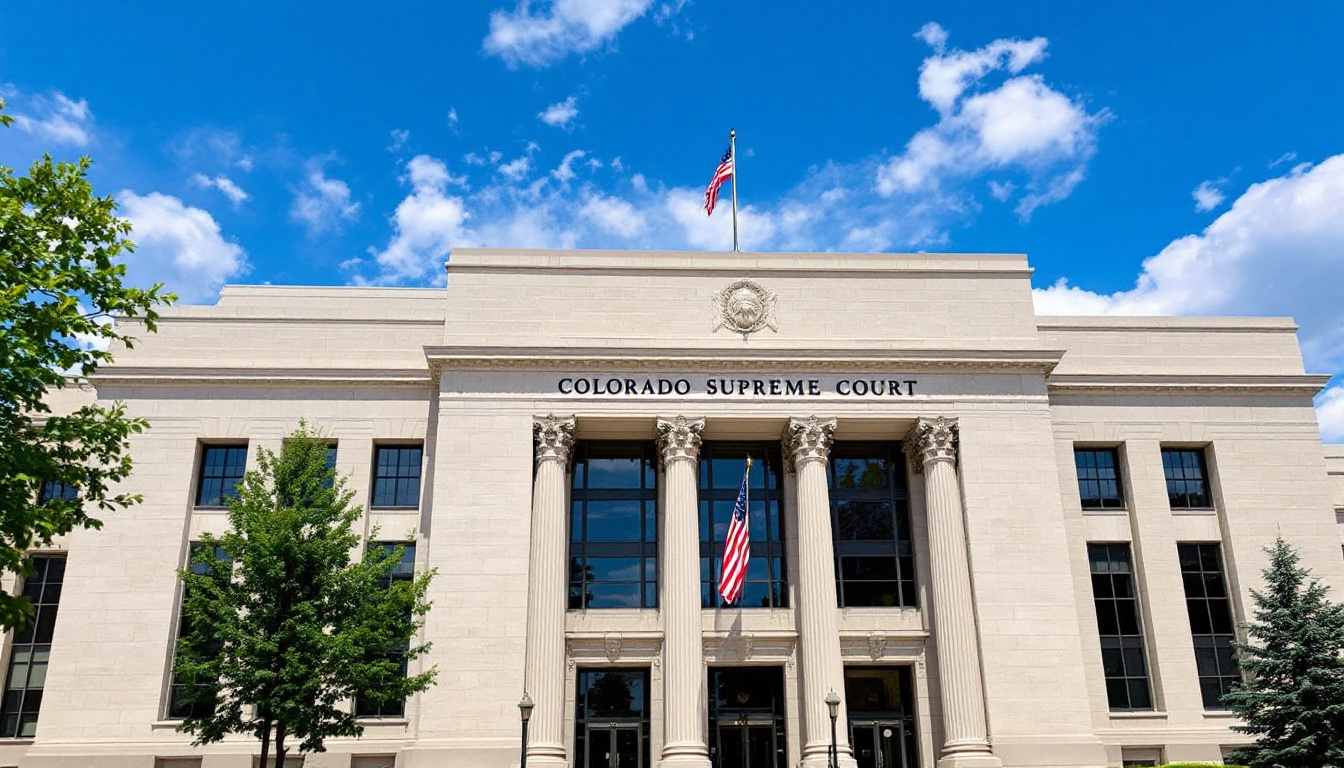
Colorado Democrats raised $2.3 million and spent over $2 million to get a set of ballot measures in front of voters this fall. The measures would have dismantled the state's independent redistricting commission, allowed mid-decade redistricting, and redrawn congressional lines to hand Democrats as many as seven of Colorado's eight congressional districts.
On Monday, the Colorado Supreme Court said no.
Chief Justice Monica Márquez, writing for the court, ruled the ballot initiatives violated Colorado's single-subject rule — the constitutional requirement that each ballot measure address one subject only. The proposed measures tried to bundle redistricting changes with other provisions, and the court wasn't having it. "We conclude that these are distinct and separate subjects," Márquez wrote, adding that "temporarily allowing mid-decade redistricting is not merely the means" to achieve the initiative's stated goal.
Justice Richard Gabriel drove the point further. "To conclude otherwise," he wrote, "would allow proponents to achieve indirectly what they could not achieve directly." Translation: you can't sneak a gerrymander through the back door just because you wrapped it in ballot-measure language.
The math tells the story of what was at stake. Colorado currently splits its eight congressional seats 4-4 between Democrats and Republicans, with one competitive district. The proposed redistricting scheme would have turned that into a potential 7-1 Democratic advantage heading into 2028 and 2030. Four-four wasn't good enough for the party that lectures everyone else about "fair elections."
The organizations behind the push weren't exactly grassroots kitchen-table operations. The Fairness Project, American Opportunity Action, and a Democratic U.S. House PAC bankrolled the effort. Over $2 million flowed into a campaign designed to rig the map before a single vote was cast. Republicans, to their credit, introduced competing ballot measures to counter the scheme — but the court's ruling made that fight unnecessary.
Here's what makes the ruling sting for Democrats: Colorado isn't Alabama. This is a blue state. The court that blocked them isn't stacked with conservative appointees looking for a reason to rule against the left. These are Colorado's own justices, applying Colorado's own constitution, and concluding that the redistricting gambit violated basic procedural requirements that exist specifically to prevent this kind of bundled power grab.
The independent redistricting commission that Democrats tried to gut was created by Colorado voters themselves after the 2020 census. Voters chose to take map-drawing out of politicians' hands. Democrats spent $2.3 million trying to put it back in theirs.
This was a centerpiece of Democrats' midterm strategy — not winning voters over with better ideas, but redrawing the lines so they wouldn't need to. The court just forced them back to the part of democracy they keep trying to skip: actually persuading people.
Voters created a nonpartisan redistricting system. Politicians tried to destroy it. Judges upheld the rules. That's supposed to be unremarkable. The fact that it feels like a victory tells you everything about where we are.