
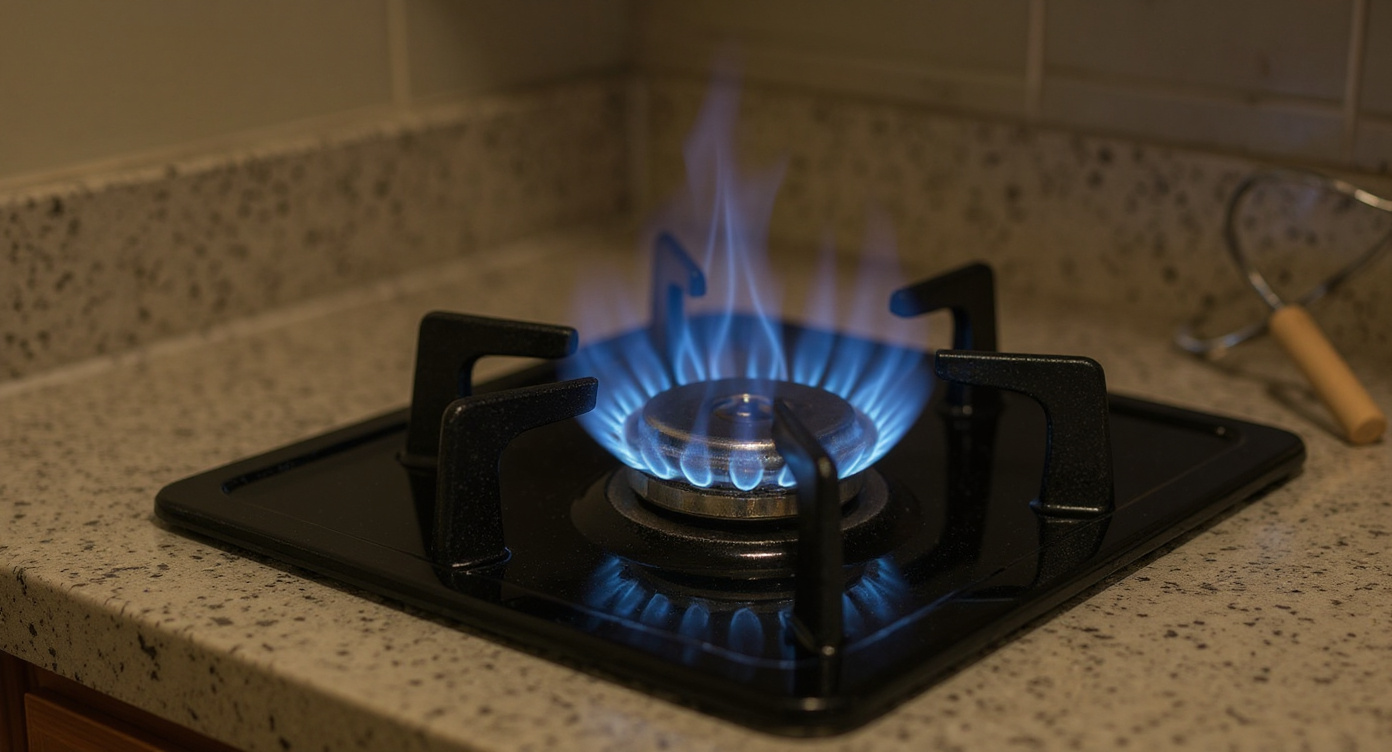
In 2023, Senate Minority Leader Chuck Schumer stood in front of cameras and said, "Nobody is taking away your gas stove." On Tuesday, the U.S. Court of Appeals for the Second Circuit upheld New York's ban on gas stoves in new construction.
Nobody, it turns out, is a flexible word.
The ruling affirmed New York's All-Electric Buildings Act, passed in 2023, which bans natural gas hookups in new buildings under seven stories. Construction and trade groups had challenged the law, arguing it was preempted by the federal Energy Policy and Conservation Act of 1975 — the idea being that federal energy law doesn't leave room for states to ban specific fuel sources. The Second Circuit disagreed, siding with a lower court that found federal law "does not preempt" the state regulation.
Schumer's exact words from 2023 are worth revisiting in full. "At first you have to laugh at the 'gas stove ban' narrative being cooked up by the MAGA GOP," he said. Not "we're working on a reasonable transition." Not "there are legitimate policy discussions happening." He called it a narrative. Being cooked up. By MAGA Republicans.
The law didn't emerge in a vacuum. New York's All-Electric Buildings Act is the direct product of the state's Climate Leadership and Community Protection Act — an aggressive emissions law that treats natural gas in residential buildings not as a consumer preference but as a problem to be eliminated on ideological schedule. It started in early 2023 when a federal product safety official floated the possibility of banning gas stoves outright as a "hidden hazard." The backlash was immediate. Schumer's denial followed — presented not as honest reassurance that the policy wasn't coming, but as dismissal of the people warning it was. The underlying goal didn't change. It just got quieter.
Former Senator Joe Manchin, the centrist Democrat from West Virginia, had pushed back against the ban proposals at the time. Senator Ted Cruz, Republican from Texas, was among the conservatives who warned this was exactly where the policy was heading.
The industry groups who brought the challenge made a straightforward argument: the 1975 federal law sets national energy standards, and a state can't effectively ban an appliance that meets those standards. The appeals court found that New York's law regulates building construction, not appliance efficiency — a distinction that lets the state prohibit gas connections without technically banning the stove itself. It's the kind of legal reasoning where you can follow every step and still end up somewhere absurd. You can own a gas stove. You just can't connect it to gas.
Defenders of the law argue it's a building code issue, not an appliance ban — that New York is simply setting construction standards for new buildings, and nobody's ripping stoves out of existing kitchens. That's technically true. It's also technically true that if every new building built from here forward can't have gas, the clock is running on gas cooking in New York. The distinction between "banning" and "phasing out through construction codes" is the kind of thing that matters to lawyers and absolutely nobody else.
The "construction codes only" framing also has a shelf life. New York's underlying climate law sets emissions targets that don't stop at new buildings. Environmental advocates have been explicit that retrofitting existing homes is part of the plan. Once the gas line is gone from new construction, the same ideological logic turns its attention to existing buildings — and eventually, to the homeowner who currently has a gas stove. The incentives come first. Then the mandates. The "nobody is ripping your stove out of your kitchen" argument is accurate today. The word "today" is doing a lot of work.
This is a pattern that extends well past kitchen appliances. The ideological engine — a climate framework that treats consumer choice in home energy as a problem to be managed rather than respected — runs through building codes, land use regulations, and appliance standards across the country. The playbook is consistent: propose a policy, wait for the opposition to sound the alarm, call the alarm a conspiracy theory, implement the policy, then explain that the implemented version is technically different from the one you denied. It works because the denial and the implementation never happen in the same news cycle. By the time the court ruling lands, the original denial is archived.
Schumer said "nobody is taking away your gas stove" in the same state that just had its gas stove ban upheld by a federal court. Both statements are technically true. The stove stays. The gas line doesn't.
When the language has to work that hard, the policy is doing exactly what they said it wasn't.