
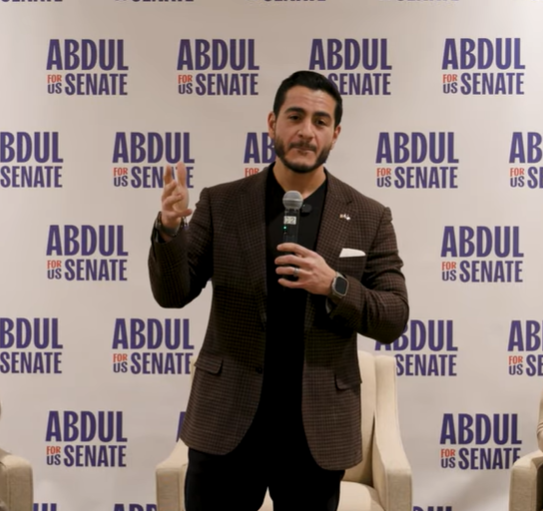
AIPAC poured over $30 million into Haley Stevens' campaign for the Michigan Senate Democratic primary. Stevens, a sitting U.S. Representative backed by Senate Minority Leader Chuck Schumer and the full weight of the Democratic establishment, outspent her opponent eleven to one.
She lost.
Abdul El-Sayed, a public health official and former gubernatorial candidate who attended at least six Democratic Socialists of America events, defeated Stevens by approximately 1.4 points this week. The man who the Democratic establishment threw everything at stopping is now their Senate nominee in one of the most critical swing states in the country.
El-Sayed's victory speech included the word "inshallah" — Arabic for "if God wills it." Senator Bernie Sanders of Vermont, who campaigned hard for El-Sayed alongside Representative Alexandria Ocasio-Cortez, was not shy about what this win meant for the party's direction.
Asked on CNN about Democratic strategist James Carville's objections to the party's leftward lurch, Sanders didn't flinch. "That's not much of a choice," he said. "If Mr. Carville doesn't want to be in my party... he can start his own party."
Sanders then went further, challenging the establishment's credibility directly: "Do you really want to be in a party where your leadership is taking huge amounts of money from AIPAC?"
That's the sitting independent senator who caucuses with Democrats telling a legendary Democratic strategist to get out. On national television. The night their candidate just won.
El-Sayed, for his part, has tried the dance that every DSA-adjacent candidate tries. "I'm not technically or practically DSA," he told reporters. "I am not somebody who is a socialist. I believe in capitalism; I just believe that capitalism has to be regulated." He said this after attending six DSA events and winning with DSA organizational support.
The eleven-to-one spending ratio is the number that should keep Democratic leadership up at night. Stevens had Schumer. She had AIPAC's record-breaking $30 million. She had every institutional advantage the party could offer. And Michigan voters — Democratic primary voters — looked at all of that and picked the other guy.
This isn't an isolated event. El-Sayed's win follows the same pattern that installed DSA-backed Zohran Mamdani as mayor of New York City. The same pattern that saw DSA candidates Donavan McKinney and William Lawrence compete in Michigan House races on the same ballot. The organizational infrastructure Sanders and Ocasio-Cortez have built over the last decade is now producing results faster than the establishment can spend against them.
Carville's wing of the Democratic Party — the one that won elections in the 1990s by running to the center, the one that believed you had to appeal to moderates in places like Michigan — just got told to leave by the far-leftist in his party.
The thirty million dollars AIPAC spent on Stevens didn't just fail to buy a primary. It proved something the establishment would rather not admit: the Democratic base doesn't want what the Democratic leadership is selling. The money moved. The voters didn't.
When the party's own voters reject an eleven-to-one spending advantage, the problem isn't the campaign. It's the product.