
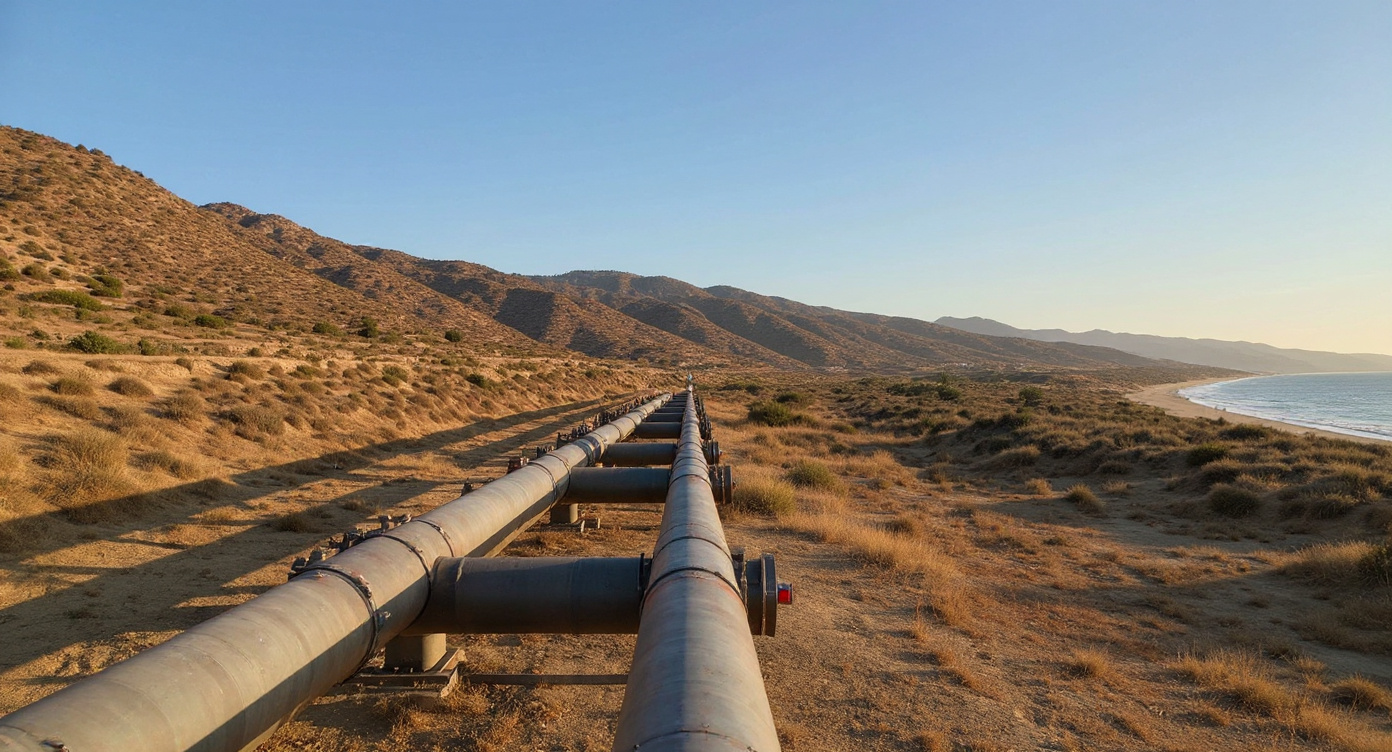
On August 21, U.S. District Judge Stephen Wilson of the Central District of California ruled that the federal government has full authority to restart the Santa Ynez Pipeline System — a line capable of moving 50,000 barrels of oil per day, or roughly 1 million barrels per month. California had tried to keep it shut down. The court said no.
That pipeline also feeds 32 military installations on the West Coast.
California's Office of the State Fire Marshal had been holding up the project, effectively using state regulatory authority to override federal energy and defense priorities. Judge Wilson's decision makes clear that when national security is on the table, Sacramento doesn't get a veto.
Adam Gustafson, Principal Deputy Assistant Attorney General, didn't mince words. "This ruling upholds decisive federal action to protect national security by restarting the flow of 50,000 barrels of oil per day when the stability of America's energy supply is threatened," he said.
The backstory matters. The pipeline has been offline since a 2015 rupture at Refugio State Beach near Santa Barbara, which resulted in a $1.45 million penalty against Sable Offshore Corporation. That was eleven years ago. California used the incident as justification to keep the line shut indefinitely — not because the pipeline couldn't be made safe, but because Sacramento's climate agenda found a convenient excuse to leave it in the ground.
The U.S. Department of Transportation's Pipeline and Hazardous Materials Safety Administration — the actual federal regulator with jurisdiction — had already been involved in oversight. But California's fire marshal office kept throwing up roadblocks, as reported by 100 Percent Fed Up. The state wasn't arguing the pipeline was unsafe after repairs. It was arguing that it simply shouldn't exist.
Environmental groups will frame this as federal overreach. That's an interesting position to take about a pipeline feeding fuel to 32 military bases under an act of Congress — the Defense Production Act — that exists specifically for moments when national security requires the government to act. The "overreach" argument works better when the federal government isn't literally keeping fighter jets fueled.
This fits a pattern. California has spent years positioning itself as a sovereign climate republic, selectively ignoring federal authority when it conflicts with the state's energy theology. Courts keep reminding them that federalism still applies — even in Sacramento. The state that can't keep its own power grid running in August wants to dictate national pipeline policy.