
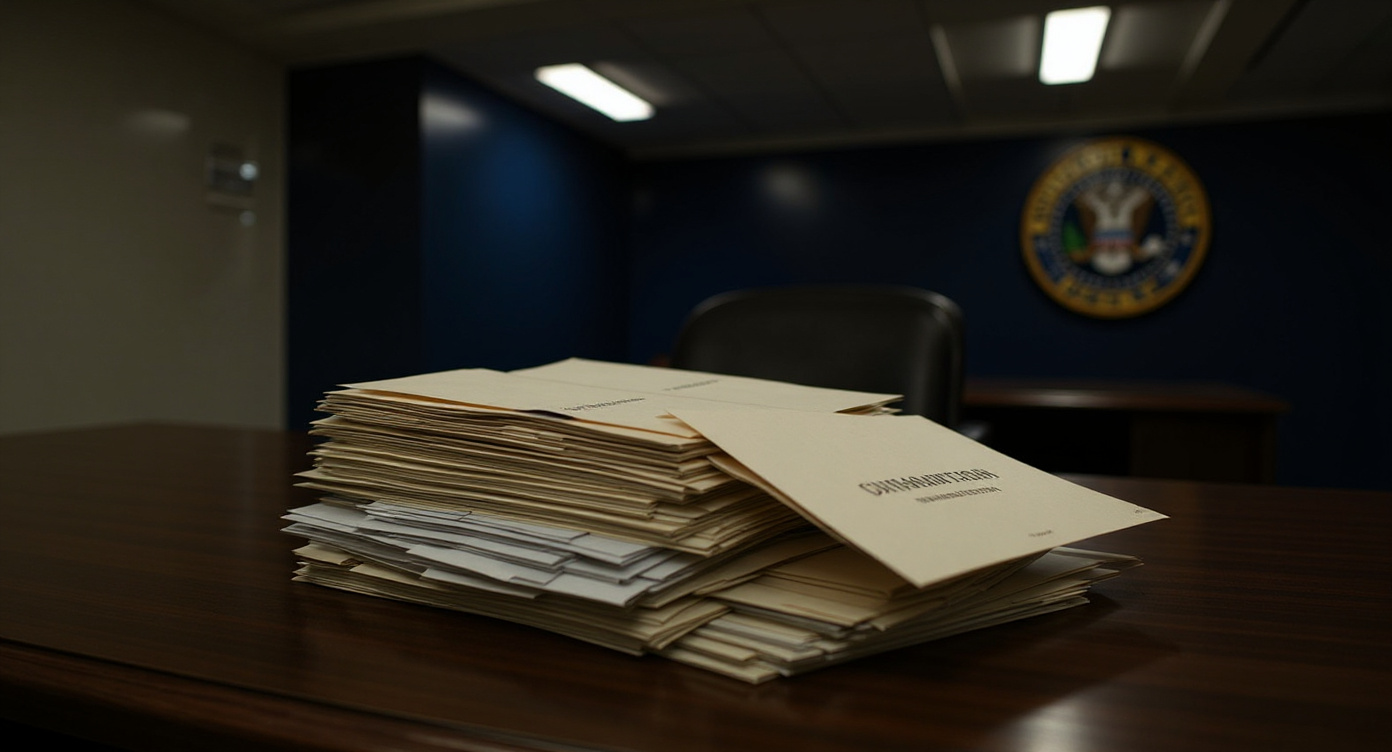
On June 2, 2023, Jack Smith's office issued a subpoena to the National Archives. By August 21, 2023, the Archives had handed over internal communications between nearly 50 journalists and Trump administration officials — messages from reporters at Fox News, CNN, CBS News, NBC News, the Wall Street Journal, the Washington Post, Bloomberg, the Los Angeles Times, the Associated Press, NPR, Reuters, and more.
Every one of those outlets spent the next two years cheering on the man who was reading their mail.
The revelation came during Senate Judiciary Committee testimony this week, with Chairman Chuck Grassley and Senator Ron Johnson leading the questioning. According to the committee's findings, Smith's team — including assistant special counsel Thomas Windom — obtained the communications as part of the broader investigation into President Trump, vacuuming up journalist correspondence with government sources across dozens of national media outlets.
"Jack Smith obtained internal communications from DOZENS of national media outlets communicating with government sources," the Senate Judiciary Committee Republicans stated. Grassley put a finer point on it: "What will the partisan media say about this disgraceful government overreach? This wasn't a normal prosecution by any means."
The answer to Grassley's question, at least so far, is nothing. The partisan media has said nothing.
David Bozell, president of the Media Research Center, noted as much — pointing out the near-total absence of broadcast coverage of the surveillance revelation. The networks that had their own reporters' communications swept up by a federal prosecutor apparently don't consider that newsworthy. CNN's internal emails ended up in Jack Smith's files, and CNN hasn't mentioned it.
Grassley and Johnson followed up with a formal letter demanding answers about the handling of privileged materials. "We are writing to determine what procedures and protocols, if any, Smith and his team used to filter privileged or potentially privileged materials," the senators wrote. The phrase "if any" is doing a lot of work in that sentence.
Journalist-source communications have been treated as near-sacrosanct in American law for decades. The DOJ's own internal guidelines impose strict limitations on subpoenaing reporters' records — limitations that exist precisely because a free press can't function if sources believe the government is reading every email. Those protections were built after Watergate-era abuses that look quaint compared to what Smith's team apparently did at scale.
The media's silence is the most clarifying detail in the entire story. These are organizations that ran weeks of breathless coverage when the Trump administration sought phone records of a handful of reporters in leak investigations. "Chilling effect on press freedom," they said. "Authoritarian tactics," they wrote. "Democracy dies in darkness," they printed on their own masthead.
Smith subpoenaed the communications of reporters at seventeen identified outlets — and probably more — and the democracy-dies-in-darkness crowd can't find the story.