
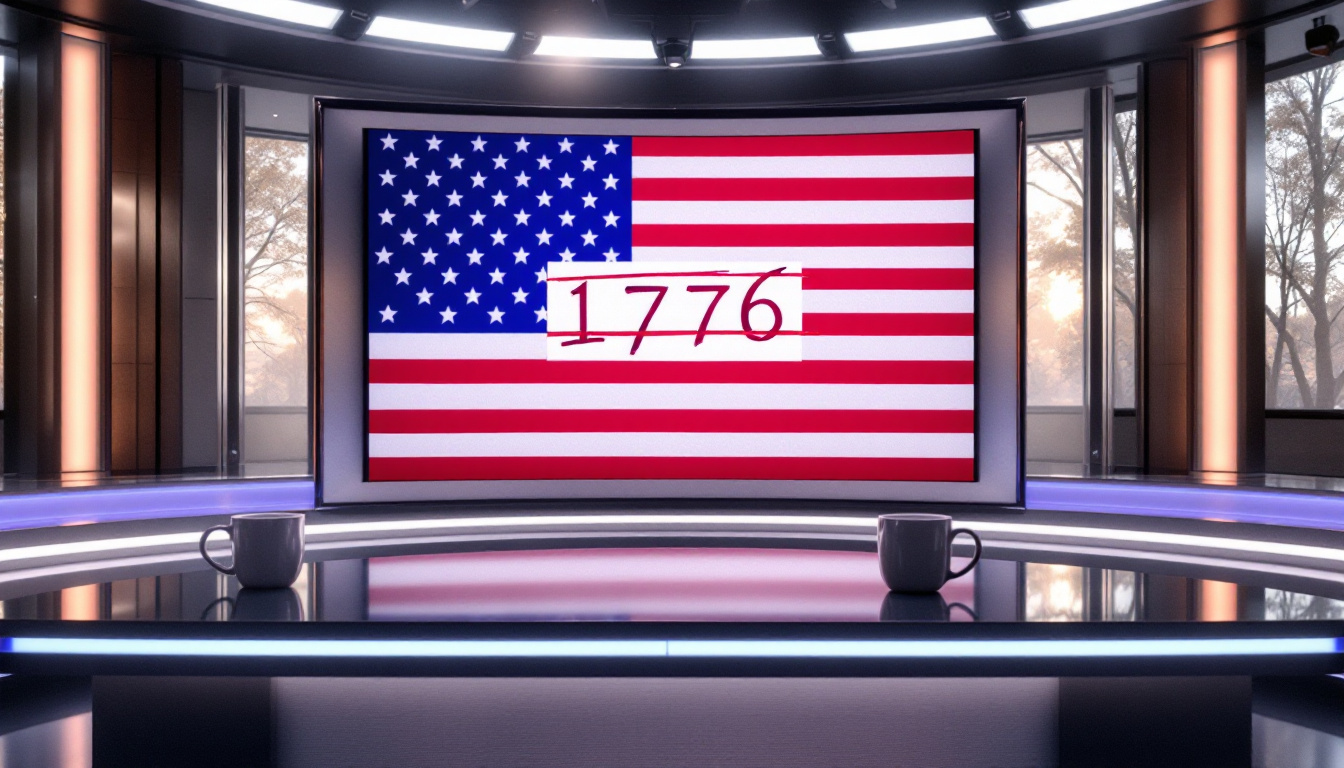
On the morning of America's 250th birthday, MS NOW historian Jon Meacham sat on the set of Morning Joe and told the audience that the country they were celebrating didn't actually exist until 1965.
"We were really founded in 1965," Meacham said. "That's when a multiracial, multiethnic democracy came more fully into being."
By that math, America isn't 250 years old. It's about 60. Meacham said as much, "We're really about 60 years old." The Declaration of Independence, the Constitution, the Bill of Rights, two World Wars, the abolition of slavery, women's suffrage, the moon landing — all of that apparently happened at a time when America wasn't formed yet. A rough draft, maybe. A beta test.
Meacham, who has made a comfortable career as the network's go-to historical authority, wasn't challenged by host Mike Barnicle or fellow panelist Mara Gay of the New York Times editorial board. Nobody on set raised an eyebrow. Nobody pointed out that the event they were covering — the 250th anniversary — was counting from 1776, a date Meacham had just declared irrelevant.
Meacham isn't a lone liberal saying this either. Joy Reid, who used to work for MS NOW, said that Juneteenth was the real beginning of the country. "Whereas Juneteenth to me is the real thing that Fourth of July is, because we really were not a democracy until we ended slavery," Reid said. "And then we were really not a democracy until the people who lost the Civil War were finally forced to affirm and act upon the 13th, 14th, and 15th amendments, which they were not forced to do until the '60s."
Meacham did throw in a line about "equality, not of outcome and not of success, but equality before God," which sounds like something you'd cross-stitch on a throw pillow. But the core claim remained unchallenged: that the nation's actual founding — the document, the principles, the rebellion against a monarchy, the constitutional framework ratified between 1787 and 1789 — was somehow insufficient to qualify as a real beginning.
The Immigration and Nationality Act and the Voting Rights Act, both signed in 1965, were landmark achievements. Nobody serious disputes that. But calling them the founding of the country requires you to argue that everything before them — including the Civil War, which killed 620,000 Americans over the question of whether all men were truly created equal — was a prologue. That the Founders didn't found anything. That the soldiers at Normandy were fighting for a country that didn't technically exist yet.
This is what happens when history becomes a tool for editorial positioning rather than a discipline. You pick the date that supports your thesis and dismiss everything before it as a rough draft. The fact that Meacham said it on the morning of the 250th — while fireworks were being loaded and flags were being hung — tells you everything about the audience he was playing to.
The 250th anniversary celebration went on anyway. Millions of Americans watched fireworks, grilled burgers, and commemorated a founding that happened in 1776. Meacham commemorated a different one.
That's his right. But when your version of history requires you to subtract 189 years from the calendar to make your point, the calendar isn't the problem.