
Marc Klaas has waited 30 years. Thirty years since Richard Allen Davis kidnapped his 12-year-old daughter Polly from a slumber party in 1993 and murdered her. Thirty years since a jury sentenced Davis to death. And two days after the midterms, California Governor Gavin Newsom wiped that sentence away — along with 547 others — in a single stroke.
Klaas called it a "knife in the back."
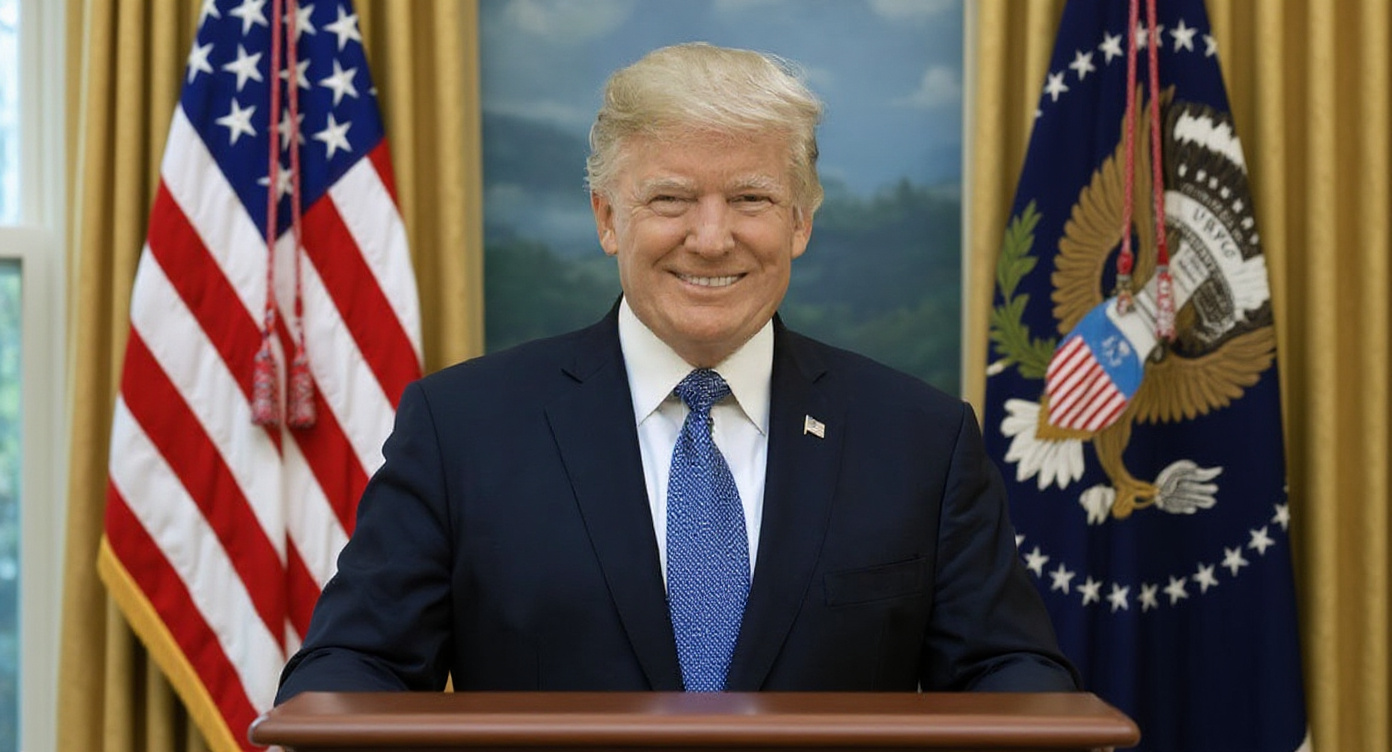
On Saturday, President Trump brought Klaas and other victims' families into the Justice Department's Great Hall — the same building where the federal government actually enforces the law — and called Newsom's mass commutation "one of the most shocking acts of injustice our country has ever seen." He said Newsom "came along and stole away the only closure those families might ever have."
The 548 commuted sentences represent California's entire death row — the largest in the Western Hemisphere. The names on that list aren't parking violators. The White House released a roster of 20 of the most notorious: Bob Williams, convicted of rape and murder in Bakersfield in 1994. Marcus Wesson, who killed nine of his own family members in Fresno in 2004. Randy Kraft, a serial killer convicted of 16 murders. Charles Ng, convicted of killing 11 people, including two infants.
Newsom didn't meet with their families first. According to Kern County District Attorney Cynthia Zimmer, Newsom "didn't know the names of defendants or even the names of victims." He signed the commutation order on November 5th, two days after the midterm elections — timing that suggests he knew exactly how popular this decision wasn't. California voters rejected abolishing the death penalty in both 2012 and 2016. Newsom imposed his moratorium anyway in 2019. The state hasn't executed anyone since 2006.
So the voters said keep it. Twice. The governor said no.
Of the 548 commuted sentences, 382 involve inmates convicted of multiple felonies — roughly 70% of the total — and those cases require California Supreme Court approval before the commutations take effect. Victims' families filed a court petition on November 17th to block the commutations from going through. Whether that holds is now in the hands of the same state judiciary that's let Newsom run the table for eight years.
The contrast with the federal government couldn't be sharper. Trump signed an executive order on Inauguration Day in January 2025 restoring the federal death penalty. Since then, the Department of Justice under Attorney General Todd Blanche has authorized death sentences for 44 defendants and sought the death penalty 49 times. The previous administration sought it once. Trump told the room Saturday that under his administration, "capital punishment will be swift and certain." Representatives from the DEA, U.S. Marshals Service, ATF, and Bureau of Prisons stood behind him.
Rep. Brandon Gill, Republican from Texas, has introduced H.R. 11132, the "Just Punishment for Murder Act," though the bill text hasn't been published yet. The legislative push signals that the federal appetite for accountability isn't just executive — it's moving through Congress.
Newsom's office has framed this as a moral evolution. The same governor who couldn't name the victims or the killers on his own commutation list is now positioning himself as the conscience of California's justice system. The families who sat in those courtrooms, who testified, who watched juries deliberate and return a verdict the state promised to carry out — they were not consulted.
Marc Klaas spent three decades being told the system works. A prosecutor once assured him, after Davis was sentenced, that he could trust it. That it works for families like his.
Five hundred forty-eight commutations later, the system worked for someone. Just not for him.