
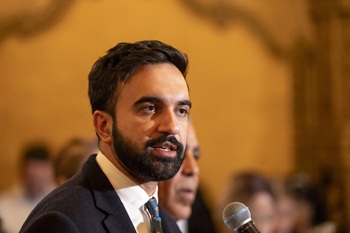
On May 29, New York City Mayor Zohran Mamdani announced he would pursue aggressive legal action against landlords who attempt to transfer or sell rent-stabilized properties. The city's Rent Guidelines Board — stacked with Mamdani allies — is moving toward a full rent freeze for the second consecutive year, even as building operating costs are surging into double digits.
The landlords aren't the only ones who should be worried.
Here's what the numbers actually look like. Fuel costs for New York apartment buildings jumped 11% in the past year. Insurance costs climbed 10.5%. Under a 2019 state law, landlords can only recover up to $50,000 in renovation costs per unit — a cap that hasn't budged despite inflation eating everything around it. Rents frozen. Costs rising. Repairs capped. The math doesn't work, and everyone in the room knows it.
Former New York Lt. Governor Betsy McCaughey, writing for AMAC Newsline, called it what it is: Mamdani's scheme "reeks of the kind of expropriation" seen in Cuba and Venezuela. She's not being dramatic. When a government tells you what you can charge, limits what you can spend on improvements, and then threatens legal action if you try to sell — that's not regulation. That's confiscation with extra paperwork.
The Rent Guidelines Board is supposed to be an independent body that weighs costs and sets reasonable rent adjustments. Christina Smyth, a board member originally appointed by former Mayor Eric Adams, let the mask slip when she admitted the decision "was decided last year on the campaign trail." She added that she would "do everything I can to assist them in being successful." So the board exists to rubber-stamp what the mayor already promised voters. Good to know.
The consequences are already visible. An estimated 57,000 apartments across New York City sit vacant — so-called "zombie" units that landlords can't afford to renovate under the $50,000 cap and can't charge enough rent to justify maintaining. In 2024, fewer than 30 properties were affected by the city's confiscation provisions. That number is about to grow. When Mamdani starts wielding legal threats against owners who try to exit a losing investment, the rational move is to stop investing entirely.
Mamdani's defenders will argue this protects tenants from greedy landlords. The Division of Housing and Community Renewal enforces the rules, and on paper the system sounds humane. But McCaughey — who has watched this playbook run in New York for decades — calls it "Moscow Mamdani's" Bolshevik scheme, and she has the receipts. When operating costs rise faster than revenue and the government blocks every exit, buildings deteriorate. Tenants don't get affordable housing. They get crumbling housing.
Justice Clarence Thomas has flagged the constitutional problem directly, noting that the constitutionality of rent regulations is "an important and pressing question." The Supreme Court declined to hear challenges to New York's rent laws in both 2023 and 2024, but Thomas's language signals the Fifth Amendment argument isn't going away. When a government policy makes it economically impossible to maintain your property and legally impossible to sell it, the line between regulation and taking gets very thin.
The U.S. District Court for the Southern District of New York will likely see more of these cases as Mamdani's enforcement push accelerates. And the New York State Legislature, which passed the 2019 law creating the $50,000 renovation cap, shows no interest in adjusting it.
Fifty-seven thousand empty apartments in a city with a housing crisis. Costs rising at 11%. Rents frozen at zero. Owners who try to sell threatened with legal action.
That's not a housing policy. That's a hostage situation with a lease agreement.