Employer-sponsored family health premiums went from $13,770 in 2010 to $26,993 in 2025. That's nearly double in fifteen years — most of which were spent under the Affordable Care Act, the law that was supposed to make healthcare, you know, affordable.
The costs that are crushing American families aren't random. They follow a pattern.
American Enterprise Institute economist Mark J. Perry has been tracking Bureau of Labor Statistics data since 2000, and the picture is clarifying. Hospital services costs have climbed 281%. College tuition is up 196%. Childcare has risen 158%. Medical services overall, up 147%. Housing, up 111%. According to AMAC Newsline, which published an extensive breakdown of Perry's analysis this week, these aren't the sectors where the free market runs wild. These are the sectors where government regulation, subsidies, and third-party payment structures dominate.
Meanwhile, in the corners of the economy where consumers actually shop with their own money and companies compete for it, the numbers tell a completely different story. Television prices have dropped 98% since 2000. Toys and software are down roughly 75%. Household furnishings are up a modest 21%. New cars — in an era of mandated safety features, emissions systems, and enough airbags to cushion a lunar landing — are up just 25%.
Average hourly wages have risen 132% since 2000, compared to 92% overall inflation. Real hourly earnings are up roughly 20% over 25 years. Americans aren't getting poorer across the board. They're getting bled dry in the specific sectors where government has inserted itself most aggressively between buyer and seller.
"The heavy hand of government has inverted the incentive structure in critical sectors," Perry's analysis concludes. When the customer isn't the one paying — when subsidies, loan guarantees, and insurance pools absorb the bill — providers have zero reason to compete on price. They compete on billing codes.
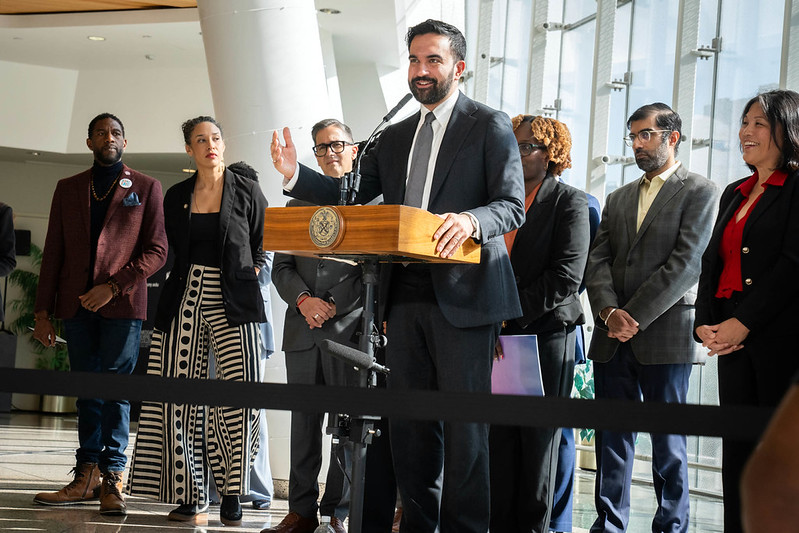
The Democratic Socialists think more government is the fix. New York City Mayor Zohran Mamdani has announced plans for five government-run grocery stores selling goods at 30% below market prices, with the first locations opening by the end of 2027. Kansas City already tried the nonprofit grocery concept. Cost to taxpayers: $17 million. For one store.
A Stanford University study on San Francisco's rent control program found it the policy cut housing supply by 15% and actually increased citywide rents by 5.1%. Landlords converted units to condos or pulled them off the market entirely. The Cato Institute has documented similar backfires across regulated markets for decades. Price controls don't lower prices. They lower supply — and then prices go up anyway, just with fewer options.
President Trump's approach in the "One Big Beautiful Bill" has taken the opposite tack — capping student loan amounts to force universities to compete on tuition rather than just raising sticker prices because the federal spigot stays open. It's the difference between treating the symptom and cutting off the disease.
A Morning Consult poll shows capitalism still holds a 52% to 37% favorability edge over socialism nationally. But among Gen Z, those numbers flip: 53% view socialism favorably, with capitalism at just 45% and communism — actual communism — polling at 38%. That's a generation raised on $26,993 health premiums and $196-per-credit-hour tuition hikes being told the free market failed them.
It didn't. The free market wasn't in the room. Every sector where costs have exploded is a sector where government stands between the customer and the provider, insulating both from the forces that made televisions cost less than a decent dinner out.
The affordability crisis is real. The diagnosis from the socialist wing just happens to prescribe more of the drug that caused the overdose.