
Socialist candidate Francesca Hong walked into Wisconsin's gubernatorial primary with as much as a 20-point lead in the polls. She lost outright to moderate Democrat David Crowley.
The polls weren't just wrong — they were operating in a different zip code from reality.
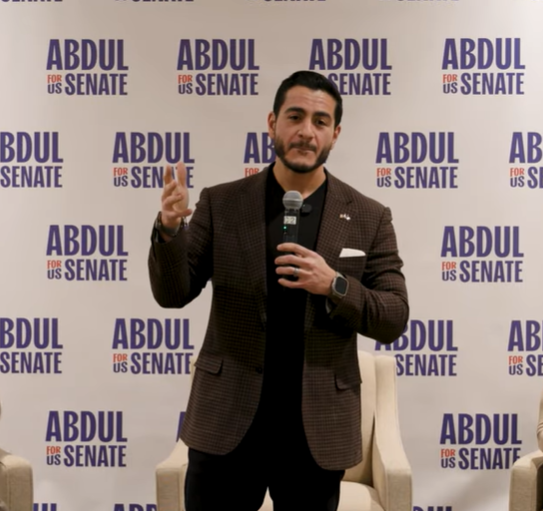
Wisconsin wasn't a fluke. In Michigan's Democratic Senate primary, radical candidate Abdul El-Sayed was supposed to cruise to victory with double-digit leads in most polls. He won by exactly one point. The polls said blowout. The ballots said coin flip.
Two primaries. Two enormous misses. Both in the same direction.
Now look at what the Real Clear Politics averages are showing for November. Democrats up 8 points in North Carolina Senate races. Up 7.5 points in Georgia. If you take those numbers at face value, you're supposed to believe the party that just watched its socialist wing demolished in Wisconsin primaries is somehow dominating the Sun Belt. Something doesn't add up.
Here's why it doesn't.
The response rate problem.
A major poll contacts 500 people and gets 50 to respond. That 10% response rate sounds manageable until you consider who the 450 non-respondents are. They're not randomly distributed. Voters who distrust pollsters, who view political surveys as an intrusion, or who've been told for years that polls are rigged tend to decline at higher rates — and those voters skew heavily Republican. By the time a pollster adjusts their raw data to compensate, they're making subjective assumptions about an electorate they're already failing to reach. The adjusted number is a guess built on another guess.
The partisan non-response problem.
Since 2016, every major election cycle has documented the same pattern: Republican and Trump-aligned voters are disproportionately unlikely to participate in polls. The gap widened as political trust collapsed on the right. Researchers call it partisan non-response bias. What it means in practice is that the sample a poll captures isn't the electorate — it's the segment of the electorate willing to answer survey questions from strangers. That segment leans left. The correction models pollsters apply haven't closed the gap across four consecutive cycles.
The adjustment problem.
After the raw data comes back, pollsters manually reweight their samples based on assumptions about who will actually vote. These adjustments are where ideology quietly enters the room. Every assumption about turnout, demographic composition, and likely-voter behavior is a judgment call — and judgment calls made by an industry that has consistently underestimated Republican support for a decade tend to look a lot like the same mistakes. The acceptable margin of error in polling is 1 to 4 points. What we're seeing in race after race is a double-digit margin of error — always in the same direction, always favoring Democrats. At some point, "margin of error" stops being a statistical concept and starts being a marketing strategy.
The incentive problem.
Not all polls are trying to measure opinion. Some are trying to move it. A "Democrats up 8" headline discourages Republican donors, suppresses conservative enthusiasm, and dominates news cycles for a week. The polling industry has no meaningful accountability for accuracy — forecasters who miss every cycle keep forecasting. When the incentive structure rewards attention over accuracy, you get polls designed to shape the narrative rather than reflect it.
This isn't new territory. In 2004, exit polls showed John Kerry winning 26 states on Election Day. George W. Bush won the presidency. In 2016, polls missed Donald Trump's path to victory across the Rust Belt by margins that ended careers. In 2020, polls underestimated Republican Senate candidates by an average of nearly six points. In 2024, polls showed a dead-even race — Trump won more decisively than any model predicted. Four cycles. Same direction. Same explanation.
The competitive races in 2026 tell the real story. In Minnesota, leftist Democratic nominee Peggy Flanagan is facing GOP nominee Michelle Tafoya in what polls call a comfortable Democratic lead. In New Hampshire, former U.S. Senator John Sununu is the likely GOP nominee against U.S. Representative Chris Pappas. In Maine, GOP Senator Susan Collins continues to defy every poll that's ever predicted her demise. These races are tighter than any survey is going to tell you.
The states to watch — Ohio, Texas, Kansas, Iowa, Montana, Nebraska — are all places where Republican enthusiasm tends to get undercounted and Democratic organizing tends to get overcounted. The pattern holds from cycle to cycle.
What makes 2026 different isn't that the polls are wrong. It's that the primary results are providing real-time receipts. Wisconsin's 20-point miss isn't an abstract debate about weighting models — it's a specific, measurable failure from a few weeks ago. Michigan's single-point El-Sayed win against double-digit predictions isn't a rounding error. These are actual elections with actual vote counts exposing the gap between what the polling industry is selling and what voters are actually doing.
Polling used to be a tool for understanding elections. Now it's a tool for shaping expectations about them. The difference matters, especially when every "Democrats are surging" headline is built on the same foundation that gave Francesca Hong a 20-point lead she never had.
The ballots don't care what the survey said. They never have.