
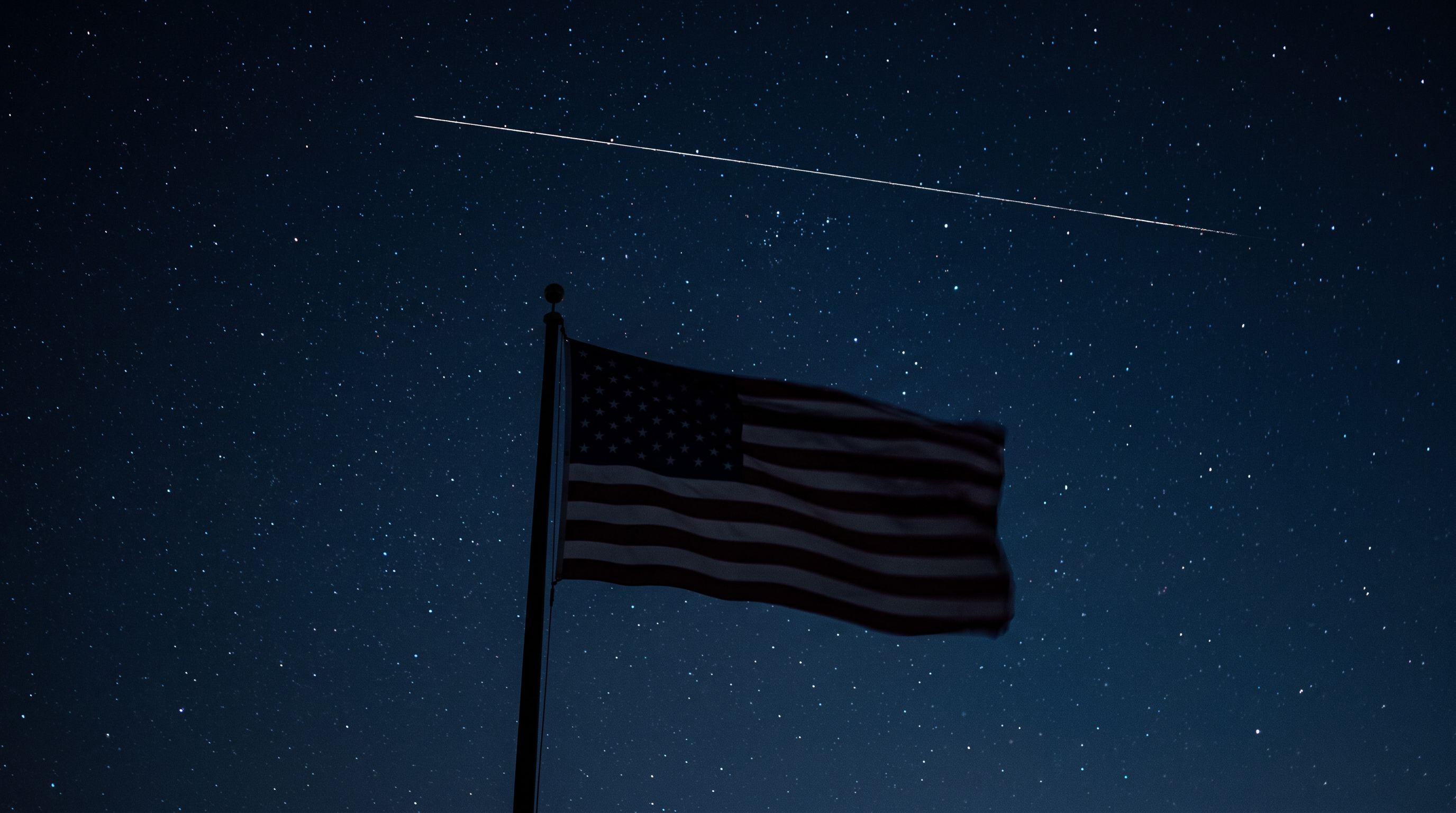
Air Force Secretary Troy Meink stood before the Air & Space Forces Association conference in National Harbor, Maryland, on September 14 and said something no American official has ever said publicly. The United States has weapons deployed in space.
"The United States now has on-orbit space control weapons capable of defending the joint force against hostile adversary action," Meink told the audience.
Meink didn't detail what those weapons are, how they work, or when exactly they were deployed. The Space Force declined to say whether the systems are kinetic or non-kinetic. What Meink did say was pointed enough: "It is critically important that we maintain our dominance not only in the air but in space, and so we've taken steps to make sure that when we're threatened, we can take care of that."
The announcement marks the first time the United States Armed Forces have publicly confirmed offensive military capability in orbit — a subject that has been debated, denied, and danced around since the Soviet Union launched Sputnik in 1957. The 1967 Outer Space Treaty prohibits nuclear weapons and other weapons of mass destruction in orbit but places no restrictions on conventional weapons systems. The U.S. just walked through that door and told the world about it.
Memory lane is worth a stroll here. When President Trump created Space Force in 2019, the reaction from the political and media establishment was exactly what you'd expect. Late-night comedians did bits. Cable news pundits smirked. A Netflix comedy series mocked the entire concept. "Space Force" became shorthand for supposedly unserious governance — a vanity project by a president who didn't understand how the military worked.
Seven years later, Troy Meink is announcing that we've armed the orbit and China needs to adjust its plans accordingly.
Meink also referenced the "Golden Dome" missile defense system — President Trump's proposed next-generation shield with a target completion date of 2028 — noting the effort has reached "flight-ready hardware" stage. The Pentagon has scheduled its first major test ahead of the 2028 timeline. Add orbital weapons to a functioning missile defense umbrella and the strategic picture starts looking very different from the one America's adversaries were counting on.
"Today we continue to ensure we remain ready to meet the challenges of evolving threats wherever they exist," Meink said. The word "wherever" is doing a lot of work in that sentence. It used to mean deserts and oceans. Now it means low Earth orbit.
The classified details will stay classified. But the message Meink delivered at National Harbor wasn't really for the conference attendees. It was for Beijing, Moscow, and Tehran. The United States built something, put it above the atmosphere, and wants its competitors to know it's there.
Funny how the biggest joke of 2019 turned into the most significant military disclosure of 2026.