
Christian Castro is a 52-year-old ICE officer currently sitting in Cameron County Jail in Brownsville, Texas. He's been there since a January 14 immigration enforcement operation that Minnesota authorities say went sideways. The state charged him with four counts of second-degree assault with a deadly weapon and one count of falsely reporting a crime.
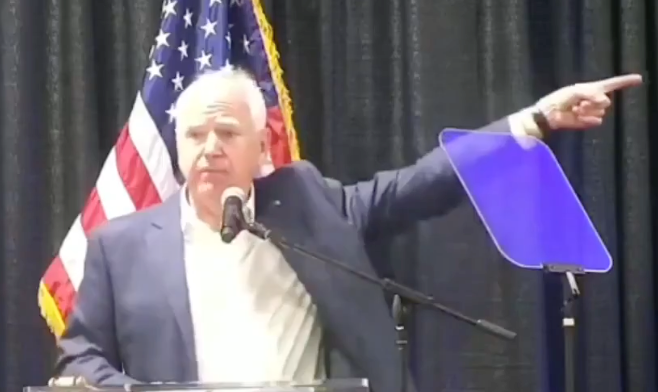
Minnesota Governor Tim Walz and his far-left Attorney General Keith Ellison wanted Texas Governor Greg Abbott to hand Castro over to them. A federal judge just told them that's not happening.
U.S. District Judge Fernando Rodriguez, Jr. — appointed by President Trump in 2018 — rejected Walz's lawsuit outright in the Southern District of Texas, Brownsville Division. The case, styled Walz, et al. v. Abbott, et al., Civil Action No. 1:26-CV-00906, sought a temporary restraining order that would have forced Abbott to surrender Castro to Minnesota for prosecution. Judge Rodriguez refused.
The legal reasoning was straightforward. Rodriguez ruled the matter was "not ripe" — constitutional extradition provisions don't include specific deadlines, and Walz's team couldn't demonstrate the urgency they claimed. The judge also noted that "fugitive" status under the law requires the accused to have committed a crime in one state and subsequently left that jurisdiction. Castro didn't flee Minnesota. He was taken into custody in Texas after an operation conducted under federal authority.
The timing mattered, too. Walz filed suit as a 90-day detention deadline approached — that clock expires August 27. Rather than building a legitimate extradition case through proper channels, the governor's office tried to sprint through federal court with emergency filings. Rodriguez wasn't impressed.
Governor Abbott, for his part, had launched his own investigation into the incident. The judge's ruling upheld Abbott's authority to do exactly that under Texas Code of Criminal Procedure articles 51.05, 51.07, and 51.13 § 4 — provisions that give a receiving governor the right to investigate before honoring any extradition demand.
The Supreme Court precedents Rodriguez cited — Roberts v. Reilly and Hyatt v. New York — reinforce a principle that sanctuary state governors would prefer didn't exist: extradition is not automatic, and a governor can examine whether the demand is legitimate before complying.
A recorded jail call allegedly captured Castro saying he'd flee to Mexico if released. Minnesota prosecutors pointed to that as evidence he was a flight risk. What they didn't explain is why a federal officer facing state charges for carrying out a federal operation should be treated like a fugitive when he never left the state where he was arrested.
A governor who spent years declaring his state a sanctuary from federal immigration law tried to use federal court to override another governor's lawful authority. The court examined the request, examined the law, and said no.
Funny how state sovereignty is sacred right up until Texas exercises it.