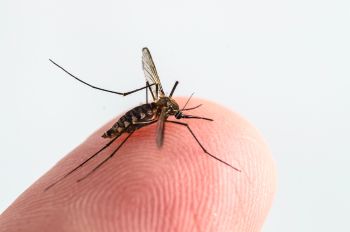
The headlines coming out of China sound eerily familiar—quarantines, mass mobilization, and neighborhood enforcement squads shutting off power to “non-compliant” homes. Only this time, the target isn’t COVID-19. It’s chikungunya, a painful mosquito-borne virus that’s now spreading through southern China.
The city of Foshan, located in Guangdong Province, has reported more than 7,000 infections, prompting the government to launch what it’s calling a “patriotic public health campaign.” If that phrase alone doesn’t give you flashbacks to 2020, just wait.
Officials have ordered mass mosquito eradication efforts involving drones, mosquito-eating fish, and genetically modified “elephant mosquitoes” designed to kill off the disease-carrying Aedes species. Residents are being told to eliminate all standing water—even from bottle caps—under threat of punishment.
And yes, the punishment has already started.
In the Guicheng subdistrict, local officials cut off electricity to at least five households for allegedly failing to comply with standing water inspections. Others reported being harassed by police over potential mosquito breeding sites. Users on the Chinese social app Rednote accused officers of excessive enforcement and intimidation tactics.
Sound familiar?
The specter of China’s infamous “zero COVID” policy looms large. From welded-shut apartment buildings to men in hazmat suits patrolling the streets, those policies became a global symbol of authoritarian public health enforcement—and they’re starting to resurface, just under a different name.
Global health expert Yanzhong Huang, of the Council on Foreign Relations, didn’t mince words: “Essentially you raise the specter of the zero-COVID strategy, with its zero-tolerance approach, the mass mobilization, the surveillance and testing.”
It doesn’t help that Chinese officials are being vague about how far they’re willing to go. Though full-scale lockdowns haven’t yet been ordered, many in China—and abroad—are bracing for the return of sweeping quarantines, travel restrictions, and military-style enforcement.
On Friday, the U.S. Centers for Disease Control and Prevention issued a Level 2 travel advisory for Americans heading to Guangdong province, warning travelers to “practice enhanced precautions.” Two vaccines for chikungunya are available to Americans, but none are currently distributed in China.
This outbreak comes at a time of global unease over rising infectious disease threats. The World Health Organization recently warned that mosquito-borne illnesses like dengue, Zika, and chikungunya are rapidly expanding due to global warming and urban crowding. Chikungunya was originally discovered in Tanzania in the 1950s—the name means “that which bends up,” referring to the contorted posture of those suffering from its severe joint pain.
But let’s not kid ourselves. The concern here isn’t just about mosquitoes.
The bigger fear—especially in the U.S.—is that governments watched how easily populations were locked down during COVID, and now they know they can do it again. Whether it’s a mosquito virus, bird flu, or another novel pathogen, the COVID playbook is sitting on the shelf, ready to go. All it takes is a “state of emergency” and some scary case numbers to bring back mask mandates, forced quarantines, digital passports, travel bans and forced vaccinations.
And given what we now know about how COVID was handled—botched data, politicized science, and brutal crackdowns—it’s not just fair to question new health crackdowns. It’s essential.
One key difference now? More Americans are awake to how these crises get used. And they’re a lot less likely to accept “it’s for your safety” as a reason to shut down churches, close schools, or strip away civil liberties.
What’s happening in China may seem far away, but it could be a test run—again. The fear isn’t just of chikungunya. The fear is that authoritarian governments around the world, including our own public health bureaucracies, are itching to dust off their COVID-era powers and give them another go.
Brace yourself. Because if the last five years taught us anything, it’s that the virus might be real—but the response is where the real danger lies.